
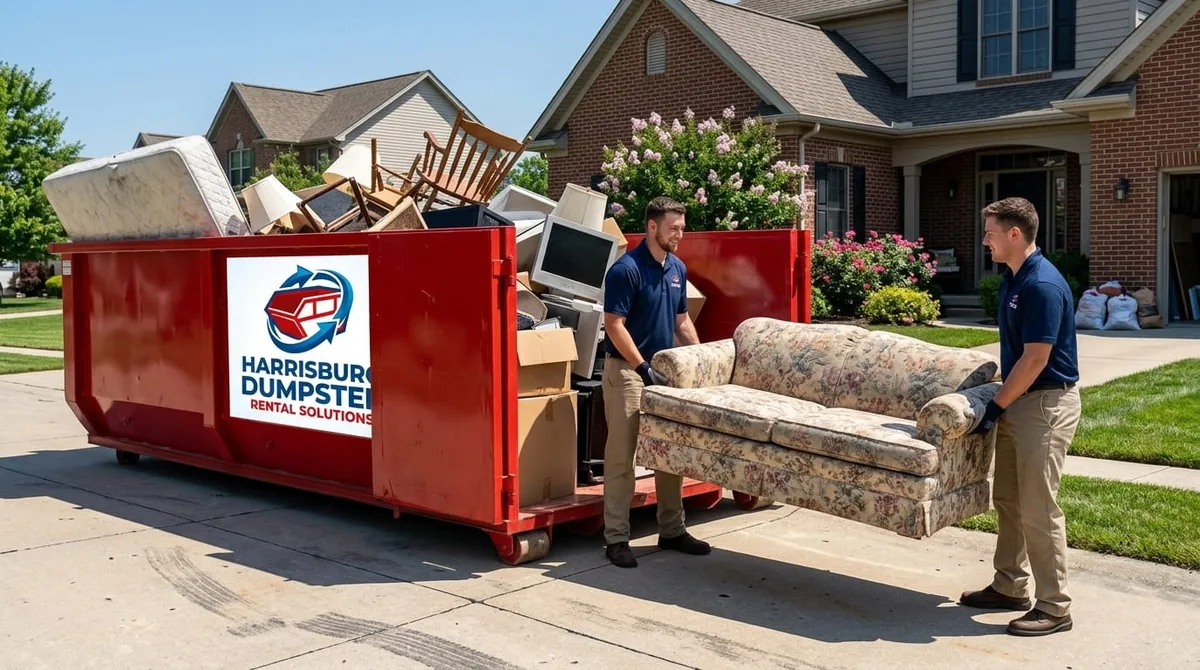
Paint, batteries, tires, fridges, electronics. Every one of them will cost you if it ends up in the container — and every one has somewhere better to go.
Why the list exists
It would be easy to assume the prohibited items list is a hauler's way of generating surcharges. It is not.
The debris in your container goes to a designated disposal facility, and in Dauphin County that is a waste-to-energy plant. Certain materials cause genuine problems in that process — fire risk, contamination, equipment damage, emissions issues. Others are simply regulated differently and require a separate, controlled waste stream.
When a prohibited item turns up in a load, the facility deals with it, and the cost travels back down the chain to whoever put it there. That is why haulers care. Not out of pedantry — out of arithmetic.
The absolutely-not list
These should never go into a roll-off container under any circumstances.
- Propane tanks and pressurised cylinders. Explosion risk in a combustion process. This one should not need explaining, and yet.
- Batteries — lithium, lead-acid, car batteries. Serious fire risk. Lithium battery fires in waste facilities and collection trucks are a growing and genuinely dangerous problem across the industry.
- Paint, solvents, thinners, oils and fuels. Household hazardous waste. Requires separate collection.
- Pesticides, herbicides and pool chemicals. Same category, same answer.
- Asbestos-containing materials. Requires licensed abatement and a regulated disposal route.
- Medical waste and sharps. Separate regulated stream, no exceptions.
- Refrigerant-containing appliances. Fridges, freezers, air conditioners and dehumidifiers must have refrigerant professionally removed first.
The take-it-somewhere-else list
These are not dangerous, but they do not belong in a general debris container. There is a better route for each.
- Electronics. TVs, computers, monitors, printers. The Dauphin County Recycling Center on South Cameron Street exists precisely for this.
- Appliances (non-refrigerant). Washers, dryers, stoves, dishwashers — these have real scrap metal value and are better recycled.
- Tires. Handled through a separate stream. Most tire retailers will take them for a small fee.
- Fluorescent tubes and CFL bulbs. Contain mercury. Separate disposal.
- Old thermostats. The mercury-containing ones are accepted at the county recycling centre.
What is perfectly fine
Worth stating clearly, because people occasionally over-correct and turn a simple job into an ordeal.
Everything from a normal renovation or clear-out is fine. Drywall, plaster, lath, timber, flooring, carpet, tile, cabinetry, trim, doors, windows, roofing shingles, siding, insulation, brick, concrete, furniture, mattresses, household junk, clothing, toys, garden waste, brush, fencing, decking.
That covers the overwhelming majority of what comes out of a house or a job site. The prohibited list is short, and it is short for a reason.
The grey areas people ask about
Half-empty paint cans. Latex paint that has been fully dried out — with hardener, cat litter, or simply left open in the sun — is generally acceptable as solid waste. Liquid paint is not. Oil-based paint is hazardous regardless.
Treated timber. Generally acceptable in construction debris, but flag it when you book so there are no surprises.
Mattresses. Accepted, though some facilities apply a handling charge. We will tell you if yours will.
Yard waste mixed with construction debris. Fine for general disposal. If you have a large volume of clean brush, keeping it separate sometimes allows cheaper processing.
Small quantities of dirt. Fine. Large quantities need a dedicated clean-fill container, because soil is extremely heavy.
If you are unsure about something, ask before you throw it in. The phone call takes a minute and it is free. Discovering the problem at the facility is neither.
The real cost of getting it wrong
A single prohibited item can turn a straightforward disposal into a contaminated load requiring special handling. Depending on the item and the facility, that can add a significant charge to your invoice.
Worse, a driver who spots a propane tank or a car battery in a container may refuse to take the load at all until it is removed — which means a wasted trip, a delay to your project, and a container sitting on your driveway another day.
The five minutes it takes to pull the batteries and the paint out of a garage clear-out is the best-value five minutes in the whole job.
A simple pre-load routine
- Before you start loading, walk the space and pull out anything on the prohibited list. Put it in a box, off to one side.
- Set aside metal for scrap. It is not prohibited, but it keeps weight down and it has value.
- Set aside anything salvageable or donatable.
- Take the prohibited box to the appropriate facility — electronics and appliances to the county recycling centre, hazardous household waste to a collection event or facility, tires to a retailer.
- Then load everything else, and stop worrying about it.
That is it. Ten minutes of sorting at the front end removes essentially all of the risk of an unexpected charge at the back end.
If you are not sure whether something is a problem, call us. We would far rather answer the question now than deal with it later — and so would you.