
Most people choose a dumpster by imagining how big their pile of junk is. That is the wrong method, and it costs money in both directions.
The wrong question and the right one
The question almost everybody asks is: how much stuff do I have?
The question that actually determines the right container is: what does my stuff weigh?
Get that backwards and you end up in one of two bad places. Either you rent a container far bigger than you need and pay for volume you never fill, or — much worse — you fill a large container with heavy material and discover that a roll-off truck cannot legally lift and transport it.
That second scenario is not theoretical. It happens, it is expensive, and the fix involves someone standing in a dumpster removing material by hand.
The five sizes and what they are really for
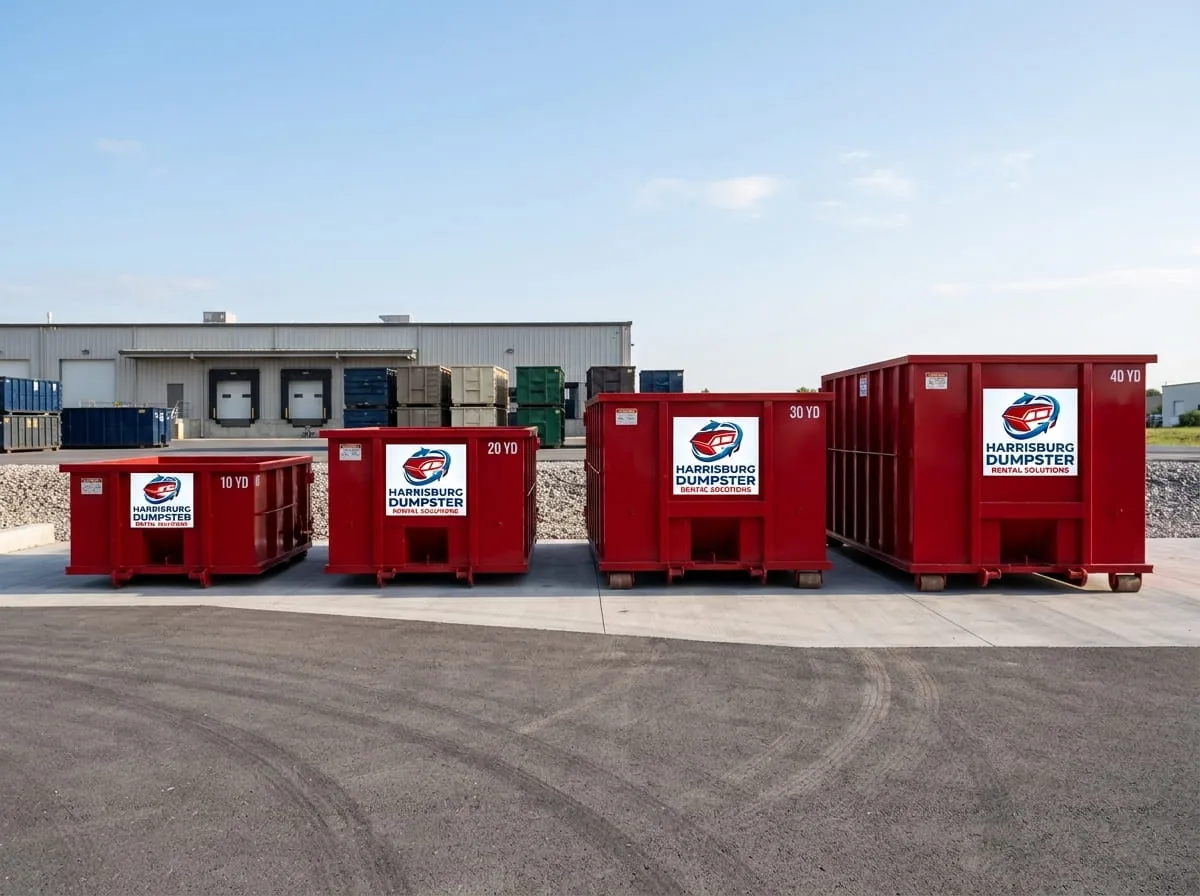
Every roll-off company runs roughly the same fleet. Here is what each size is actually designed to do, as opposed to how it gets marketed.
- 10 yard. The heavy-debris specialist. Concrete, brick, block, tile, dirt, stone. Also fine for small clean-outs and single bathroom strips. It looks small because it has to be.
- 15 yard. The genuine mid-size. Roof tear-offs, medium remodels, garage clear-outs. Booked less often than it should be — many people who take a 20 would have been better served here.
- 20 yard. The default. Whole-floor renovations, large clear-outs, general construction debris. If you told us nothing about your project, this is what we would send.
- 30 yard. Same ground footprint as a 20, but a foot and a half taller. Fifty percent more volume for no extra driveway. Excellent for bulky, light debris. Dangerous to fill with anything heavy.
- 40 yard. Commercial and industrial. Very large volumes of very light material — insulation, siding, packaging, fixtures. Almost never the right choice for a house.
A rough weight guide
These figures are approximate and vary with condition and moisture, but they are close enough to make a good decision with.
- Mixed household junk: roughly 150–250 lbs per cubic yard
- Drywall: roughly 500 lbs per cubic yard
- Asphalt shingles: roughly 230–250 lbs per roofing square
- Plaster and lath: heavier than drywall, and common in older Harrisburg homes
- Soil and sod: roughly 2,000+ lbs per cubic yard
- Concrete and masonry: roughly 4,000 lbs per cubic yard
Run those against a container's tonnage allowance and the picture clarifies fast. Two cubic yards of concrete is four tons. That is the entire allowance on most standard rentals, and you have barely covered the floor of the container.
Matching size to project
- Single bathroom remodel: 10 yards. Tile is heavy; you do not need volume.
- Kitchen remodel: 15 or 20 yards, depending on whether the flooring and drywall are coming out too.
- Roof tear-off (single layer, average home): 15 yards.
- Roof tear-off (two layers or large roof): 20 yards, or plan a swap.
- Basement finish or clear-out: 20 yards.
- Full house clear-out: 20 yards, and expect to need a swap on a large property.
- Deck removal: 15 or 20 yards — timber is bulkier than you expect.
- Patio or driveway removal: 10 yards, and likely more than one.
- Large yard clearing and brush: 30 yards. Brush is bulky and light.
- Commercial fit-out or strip-out: 30 or 40 yards.
- Full interior gut of a rowhome: 20 yards, with at least one swap. Probably two.
When to size up
Go bigger when your debris is light and bulky, when your access is easy, and when a second haul would cost more than the size upgrade — which it usually would.
The 20-to-30 upgrade in particular is often a bargain. Because the 30 yard container has the same footprint as the 20, it fits anywhere the 20 fits. You are buying height, not ground space. If there is any real chance you will overfill a 20 with light material, the 30 is the smarter booking.
When to size down
Go smaller when your debris is heavy. Always. This is not negotiable, and any hauler who tells you otherwise is either inexperienced or is planning to hand you an overage bill.
Also size down when access is genuinely constrained — a tight Steelton street, a narrow Hummelstown alley, a steep Lemoyne driveway. A container you cannot get delivered is worth nothing regardless of its capacity.
Load it properly and you will need less container
- Break down furniture. A dismantled wardrobe takes a fraction of the space of an intact one.
- Put heavy, flat material on the floor of the container first. It stabilises the load and stops you wasting height.
- Nest and stack rather than throwing. It feels slower and it is not — you will fit substantially more in.
- Load through the rear barn door rather than heaving material over the side. Every container we run has one.
- Keep everything below the top rail. An overfilled container cannot be tarped, and an untarped load cannot legally leave your property.
Just call and ask
The genuinely useful advice here is the least exciting: describe your project to someone who does this every day and let them size it.
It takes ninety seconds on the phone. We will ask what is coming out, roughly how much, what the access is like, and how long you need it. Then we will tell you what to book — including, quite often, that you need something smaller and cheaper than you were about to order.
That is not us being noble. A correctly sized container means no overage bill, no second haul, no awkward phone call. It is easier for everyone.